RES701
The RES701 Class Blog
February 2021
This is the RES701 Class Blog space. Learning resources will all be posted here instead of Moodle. MS Teams will be used for daily communication and quick sharing of ideas and instructions. Moodle will only act as the static course place holder for assignments, drop-boxes, etc.
This semester quite a few of the students will be studying online from China. The communication and the time difference will surely be a challenge, so I ask all of you not only to be understanding, but also to give me immediate feedback in MS Teams if/when something doesn’t work for you.
Student blogs
Semester 1 2021
- Abhimanu
- Carlos
- Claudio
- Dylan
- Hannah
- Hayden
- Jiayu
- Jieni
- Josh
- Louis
- Lydia
- Mark
- Qi
- Regan
- Stewart
- Tiewei
- Victoria
- Warren
- Xiao
- Yuchen
- Yue
- Yuteng
- Zane
- Zach
Last blog posting
November 27 2020
One of your last blog posts is to write a reflection on the course, what you have learned, what you have enjoyed (or not!). It helps me reflect on how the course has gone and how I can improve it for the next group of students :)
Intellectual Property, Copyright, Copyleft and Creative Commons
November 20 2020
Today’s theme is about protecting and sharing your work. As I will mention today, there are a few different ways to this. But have a look at the two links below, and I think that you will find an agreement that covers what you are doing and what you want to achieve with it.
-
And – a video to encourage you:
Ethical Behaviour – Headlines
October 13 2020
Today’s session was all about ethics – moving into ethical behaviour in research, so it hopefully makes some sense in the course perspective.
Most of you would probably not have any ethical issues in your project proposals. But as soon as you have other people or beings involved in you research – as participants or in your research community – it is something you would have to consider.
Headlines – what does it mean to behave ethically?
- About social values not laws
- Treat others as you would wish to be treated
- Evaluating how things affect others – particularly negatively
- Respectful treatment – treated as an equal (human) being
- Privacy protected/safe environment
- Health and well being (and property) protected
Exercise; Ethical Behaviour
October 13 2020
Discuss in your group if the behaviour described in the examples below is related to ethics:
If it is, why and how?
Can you come up with a solution that would solve the ethical problem?
- You find some good images on the web that would look good on your site. You copy and paste them to your blog.
- You are in a hurry to finish an assignment and you find the perfect explanation of a difficult concept on wikipedia. You decide to copy it into your work.
- You are a medical researcher and you think you have discovered a new drug that cures lung cancer. It worked well on mice although a few of them died of heart problems. You want to test it on people. You recruit 100 lung cancer patients into your treatment programme. You don’t tell them about the new drug. You treat 50 patients with usual drugs and 50 with the new drug to see which is better.
- You are doing your PhD about drug abuse among students. You interview 30 students about their drug use. You discover that one of the students is actually a fairly big time dealer and you report him to the police.
- You are a researcher looking at the effect of violent computer games on children. You recruit 20 children into your study. Over a month you regularly show them images of violence to see if it has an adverse effect on their behaviour. One of the children becomes quite distressed each time and so you stop showing her images and drop her from the study.
- You want to research how easy it is to hack into your organisation’s computer system by persuading people to divulge login and password details. You recruit a small team to ring up key people in the organisation and persuade them to give either their own or their boss’s details.
- You are doing an initial research in area of a town where may bars and pubs are located, to estimate the level of problematic social behaviour in the area. your research is independent from the police, because you want to observe their behaviour as well. You observe both abusive and violent behaviour.
Milgram Experiment; Unethical Research to Expose Unethical Behaviour
October 13 2020
Stanley Milgram: Obedience (1965) from Jamie Palmer on Vimeo.
Support for assignment 3 writing
September 15 2020
You can find the Assignment 3 document on Moodle. In the PRJ70x section of this blog, you can find a proposal template and links that lead the the library’s database, where you can search previous projects. Just remember to use the search parameters ‘BIT Project Report’.
This document is the Assessment Handbook for the Project Course. Page 3 contains guidelines for the proposal (which is the same as Assessment 3). Just remember that you are submitting a separate (possibly new) document as your Project Proposal.
Areas of interest
April 16 2021
-
First there is a little narcissist exercise. It might appear a little self obsessed – but I think that it is a good way of getting started with something relevant. Please copy the questions into you blog, and finish the exercise there. We’ll discuss the very last question in class after a little while.
-
From there, we will go into the more serious stuff. This will be a working document next week also.
We are doing task 1 and 2 today in this working document, today the 15th of September, and continue next week. The idea with this exercise, is that you copy your own version into the shared document. You might have to copy the template over to your own word processor, and cope the text back to the shared Google Doc. Often the Google Doc is struggling when so many are editing at once.
Academic article search exercise - blog posting for next week
April 9 2021
-
Read the posting below carefully.
-
Pay attention to how to identify if a paper/article is one we could term ‘academic’.
-
Search for two ‘academic’ articles related to IT or computing (in English!) using any method you choose - this can be online, or from the library or some other source. You might want to try out different methods! It makes sense to look for articles that are in an area of IT that interests you but it doesn’t have to be. Make sure that at least one of the articles is a ‘full text’ and not just an abstract.
-
Save these two articles in your Google Scholar library (or elsewhere if you use a different method) so that you can easily find them again.
-
For both of the academic articles you find, post to your blog for this week the following information:
- Title and author(s) of the article
- APA reference (give it your best shot!) (try using the ‘cite’ option on Google Scholar)
- how you found the article and what keywords you used
- what kind of article it is, ( journal paper, conference paper, masters thesis…..)
- all the reasons that you think it is an academic article
- how well it fits the ‘structure of an academic article’ that I described in my previous post
- how many references it has
- how many citations it has (if you can find out)
- for articles that you found online, the url of the article
- say whether you are interested in properly reading the article or not (and give some reasons!)
Note I am not asking you to read the articles you find (although of course you can if you want to!) - we will be working on strategies for reading academic articles later - but to look at the structure and characteristics of the things you find. This eventually becomes second nature and you can tell from a quick scan of an article how ‘academic’ or ‘credible’ it is likely to be. Initially though it is about assessing it for the things I have mentioned above and making your decision!
Blog posting for next week
March 26 2021
Please write briefly about your presentation topic today. You could also link the slides.
Why do we look for ‘academic’ articles?
March 26 2021
It is important for:
Content
- find out what other, more knowledgeable people have said about the area
- find what is likely to be the most ‘credible’ information that you can find
- ground your work in work that others have done (no one expects you to come up with a completely original idea
Method
- look at the kind of research approach that others have taken
- understand how others have applied the research approach to learn how to do it well
It is useful to
- see what questions others have left unanswered. There may be room for you to pick up one of those questions yourself.
- find a useful starting point for your own work.
What is an ‘academic’ article?
When I refer to an academic article or paper, I am generally meaning a summary of research that has been published in a peer-reviewed journal or presented at a peer-reviewed conference. Although, Masters and PhD theses are also ‘academic’ they are too long and too detailed to be ‘papers’. Generally a paper will be around 4,000 – 8,000 words long or somewhere around 5 – 10 printed pages. They are usually written by academics but not always!
Of course, on the internet you will also find a large number of papers or articles that are not considered to be academic, these could be newspaper articles, articles from practitioner journals, blog postings, vanity publishing, white papers from companies such as Microsoft or IBM among others. These can often have useful information but as we have discussed, they are not always ‘valid’ as research and are often biased.
There are also things which fall in between the two - papers such as university working papers, individually published work by academics (on a blog perhaps). Again these can be useful but you will need to be clear about whether they are really useful as a basis for your research by looking at some of the criteria below.
So how can you tell what is academic or not?
Before the internet, it was reasonably straightforward to identify such articles (or ‘papers’) as they would generally be published either in specialised research journals or books, or in the proceedings of academic conferences. Of course, this still happens and often their abstracts are freely available online. However, a number of publishers charge a fee to read the complete paper.
Generally, if you have searched on NMIT’s online library databases or used an academic search engine like Google Scholar, the results you find will be academic. This is because they have already screened out the non-academic work – they have done some of the hard work for you already! However, if you are still not sure you can usually tell by looking at the criteria below.
Usually, an academic paper will be reporting on primary research of some kind and will have been peer-reviewed. Most academic papers are also written to a very similar structure which not only makes it easier to read but also easier to work out what kind of article it is. The main components of an academic paper are:
- the title
- the authors (usually with an email address and affiliation)
- the abstract
- the introduction
- a review of other papers relevant to the topic ( a literature review)
- a description of what the research was and what the researchers did
- the results of what they did
- a discussion about what the results mean
- a conclusion
- a list of references
If the paper you find does not have an abstract and/or has no references, it is very unlikely to be an academic article.
Blog posting for next week
March 19 2021
Find at least 3 different sources of evidence (e.g. a blog post, a journal article, youtube video etc.) for each of the two topics listed below (6 in total). You don’t need to read or watch them.
Try to find as many different kinds of sources of evidence as you can but try to find at least two sources which you think might be ‘academic papers/articles.
Topics:
- Computational Thinking
- Virtualisation Technology
Write a blog post and for each source you find:
- post the URL, e.g. http://
- the search terms you used,
- how you found it (e.g. Google search or followed link from wikipedia)
- who wrote/created it
- when it was written/created/recorded/published
- what kind of ‘publication’ it is (e.g. news item, youtube video, white paper)
- how ‘credible (believable)’ you think it is – include your reasons –>
Presentations next week
March 19 2021
Preparation Work for next time - 26-3-21
We will be looking at different kinds of methods/methodologies that can be used in our research. In preparation for that I would like you to investigate the topic below that you have been allocated. You are working together to make a short presentation next week - no more than 10 min:
- Action Research - Dylan, Zane, Claudio & Hayden
- Discourse Analysis - Carlos & Regan
- Exploratory Research - Warren, Louis & Victoria
- Case Study Research - Tiewei, Yue, Yuchen, Jiayu & Jieni
- Meta-Analysis -
- Design-based research (Design Science) - Qi & Xiao
- Experimental Research - Mark
- Observational Research - Abhimanu & Lydia
- Randomised Controlled Trials - Hannah, Stewart & Josh
- Secondary Research - Yuteng & Zach
For your topic I want you to answer these questions as a presentation, Also, you will create an individual blog post as homework for the week after the presentation (you can include links to other information or videos etc if you want):
- What is it ? (Short description of how it works)
- What kinds of questions/problems might it be useful for?
- How could it be used in IT research (try to think of an example)?
- What are the strengths of the approach?
- What are the weaknesses of the approach?
Opinions about Covid-19 – an example of epistemology and ontology
March 19 2021
An example from the current discussion climate; find quite different opinions about Covid-19. Please find two opinions each – communicate in the classroom so you don’t do the same ones. After 10-1min, briefly present the position/opinion in the classroom and try to identify which ontology (perception of reality) and epistemology (how the knowledge is generated) that this position represents. Don’t be afraid of contradictions :)
A little exercise about credibility/validity
March 19 2021
This is a little survey that hopefully will lead to a discussion about credibility.
You open this spreadsheet, find the column with the number ID you have been assigned, and carefully think about how credible you think the listed resources are (do not think very, very long, though). And then you enter a value between 1 and 10 (1 is not credible, 10 is totally credible).
We will discuss the results afterwards.
Credibility & Validity
March 19 2021
- Credibility - how believable is the information you have found?
- Validity - how likely is it to be ‘true’ - i.e ‘valid’?
How do we know - or rather decide!? Mainly comes down to four questions;
-
Does the epistemology match the ontology?
i.e. was the means of discovering the information suitable for the question that was being asked or for the type of knowledge that was being searched for. In order to decide this you have to pay attention to the ‘question’ or ‘problem’ as well as what the researchers actually did. -
Was the method followed sufficiently rigorous? i.e. is it repeatable or reproducible and can you follow the reasoning behind the conclusions that are being drawn? How well did they do the work?
-
Who did the work/research? Do they seem credible? i.e who do they work for, who paid for the research, where/what is the bias?
-
Where and when was the work made public (or published)
Credibility & Validity
March 19 2021
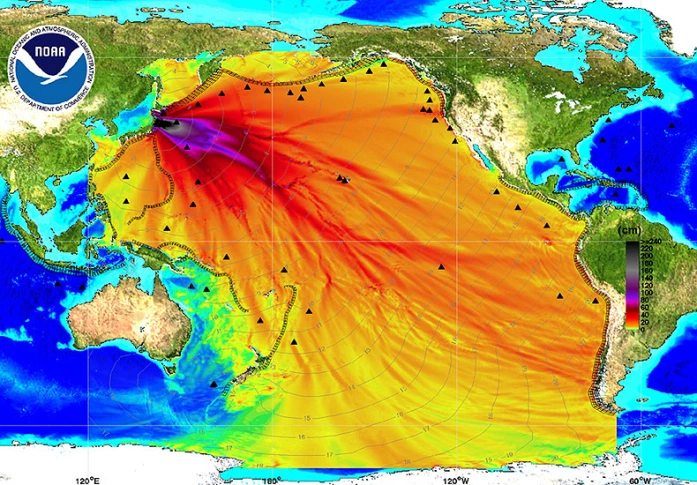
The massive (8.9) Tohoku earthquake and subsequent tsunami that hit Japan in March 2011 resulted in a series of equipment failures, nuclear meltdowns and releases of radioactive materials from the Fukushima I Nuclear Power Plant, the largest nuclear disaster since the catastrophic accident at the Chernobyl Nuclear Power Plant in Ukraine in April 1986.
In August 2013, news accounts quoted an official from Japan’s Nuclear Regulatory Authority as stating that highly radioactive water was seeping from the plant into the Pacific Ocean and creating an “emergency” situation that the plant’s operators were not adequately containing.
Credibility & Validity
March 19 2021
Being religious - or not?

Credibility & Validity
March 19 2021
Ruins of Ancient City Discovered in Australian Desert
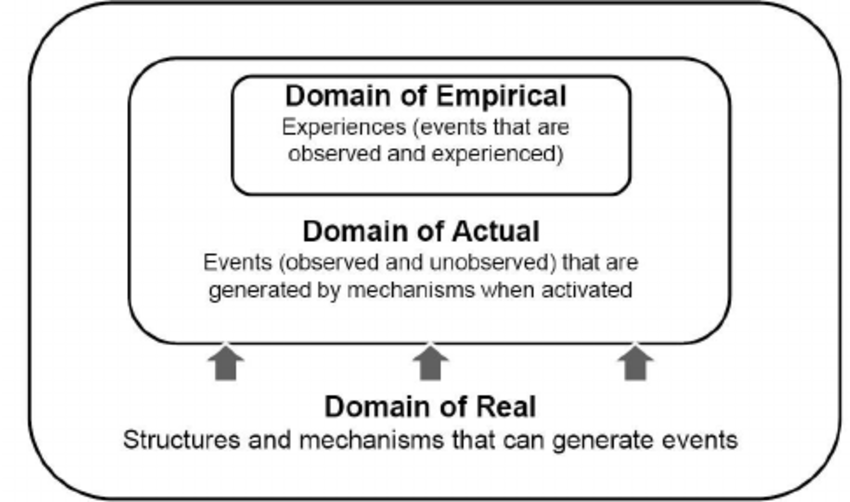
A hilosophical research position – Critical Realism
March 12 2021
Blog posting for next week
March 12 2021
Friday’s session – it is probably going to be a challenge for all of us. But hopefully a rewarding one.
You blog posting for next week should be about research paradigms; please don’t try to recount everything that was said on Friday, but try instead to give the posting your own personal touch and relate it to the work/courses you are currently doing – or have done. In other words make the posting relevant to yourself. Then there is a good chance that it might also be interesting for me and others to read.
Looking forward 🙂
Ontologies, Epistemologies into Paradigms; a small guide to my presentation today
March 12 2021
Ontological continuum
Ontologyrefers to our assumptions of what exists, or what is ‘real’. It can range from nominalism (things are only what we as an individual think exists) to realism (believing that everything exists in an objective way and we can all experience it objectively).
Other positions include ‘constructivism’ – reality is socially constructed – some things only have an existence because we, as people, as a society or as a culture, agree that they do.
Epistemological continuum
Epistemology refers to the type of valid knowledge that we can obtain about things. This can be characterised in various ways for example from positivism (regularity, measurement, objective observation, causal effects) to anti-positivism (each person’s perception is valid).
One important view is that of those who believe in interpretivism – who believe that the researcher can never be objective and that human interpretation and understanding is also ‘valid’ knowledge.
Research paradigms Where different ontologies overlap with different epistemological approaches, we have ‘paradigms’ (or ways of undertaking the search for valid knowledge). For example, Western thought has for many centuries been characterized by the acceptance of the ‘classicscientific paradigm’ – a realist ontology with a positivist epistemology.
However, the post-modernist movement of the last half of the 20th century may be moving us towards a different paradigm as the epistemological position moves more towards an interpretivist or even anti-positivist (relativism) approach. Ontology nominalism (things are only what we as an individual think exists)
The social science paradigm falls somewhat in the middle and is often characterised by a ‘constructionist’ ontology and an interpretivist epistemology.
Visual artists (i.e. painters) are much further toward the other ends of both continuums
Have I misunderstood what a scientific paradigm is?
March 12 2021
In the past concerned students have contacted me because they actually looked up what a Scientific Paradigm is – and the explanation is not at all like the one I gave.
Don’t worry – there are many ways of explaining what it is – my one might be a bit unusual. Try to choose one though, and see how much you can get out of it. The main ones I am talking about are:
- Classic Scientific Paradigm
- Social Science Paradigm
- Post-Modernist Approach
And then I mention one single method that possibly could bypass a definite choice; Design Science. But there are many other paradigms and methods – and ways to escape a definite choice. Confused?
You should be 🙂
But from now on we are making things simpler – hopefully 🙂
Questions about truth and facts
March 4 2021
- Is there adifference between ‘knowing’ something and ‘having knowledge’ of something?
- What is ‘truth’?
- What do we really mean when we say something is ‘true’?
- Is there a difference between knowing something is ‘true’ and believing that something is ‘true’?
- What is the difference between subjective and objective ‘truth’?
- What is a ‘fact’ and can ‘facts’ change ?
- How do we discover if something is ‘true’ or not?
- “We do not see things as they are but as we are” Anais Nin. What does this mean?
- “Reality is an illusion, albeit a very persistent one” (Einstein) What does this mean?
- Is there a difference between ‘true’ and ‘valid’? Explain!
Blog posting for next week
August 4 2020
- What is ontology? How is it relevant to research?
- What is epistemology? How is it relevant to research?
- What is the connection between ontology and epistemology in a research context?
Next week we will discuss the Scientific Paradigms – and get started with thinking about the first assignment.
Presentation
February 26 2021
Presentation about Research and research
First blog posting
February 26 2021
Follow the instructions in for example WordPress.com to set up the blog. If you are using an existing blog, please create a RES701 category and send me the url; Lars.Dam@nmit.ac.nz
Write your first post:
- What do you think ‘research’ is?
- Do you think you will ever need research skills?
- What do you think a research journal is and who is it written for?
- What is plagiarism?
- Why is it important to avoid it?
Why blogging in RES701?
July 21 2020
As you might have sensed by now, it is very important for this course, that we create and maintain a ‘research community’. One of the most important and efficient ways of doing this, is to write up your reflections on the discussions and the presentations in the classroom and what you are learning, as we move along.
This means staying up to date with this blog and update you own blog weekly – at least. So bookmark this blog and follow it.
As soon as possible, we will have links up to all of your blogs here. You will then be able to follow the learning journey of your classmates – selectively if you like 🙂
Don’t take the competition with your classmates to seriously. Some are very good at writing and if they are very competitive, they would have something impressive up most of the time. What I am looking for from everyone, is active participation and deep thinking. Which does require some writing at the end of the day. So – do your best – consistently 🙂 – as in any other teamwork.
Student blogs from previous semesters
Semester 2 2020
Semester 1 2020